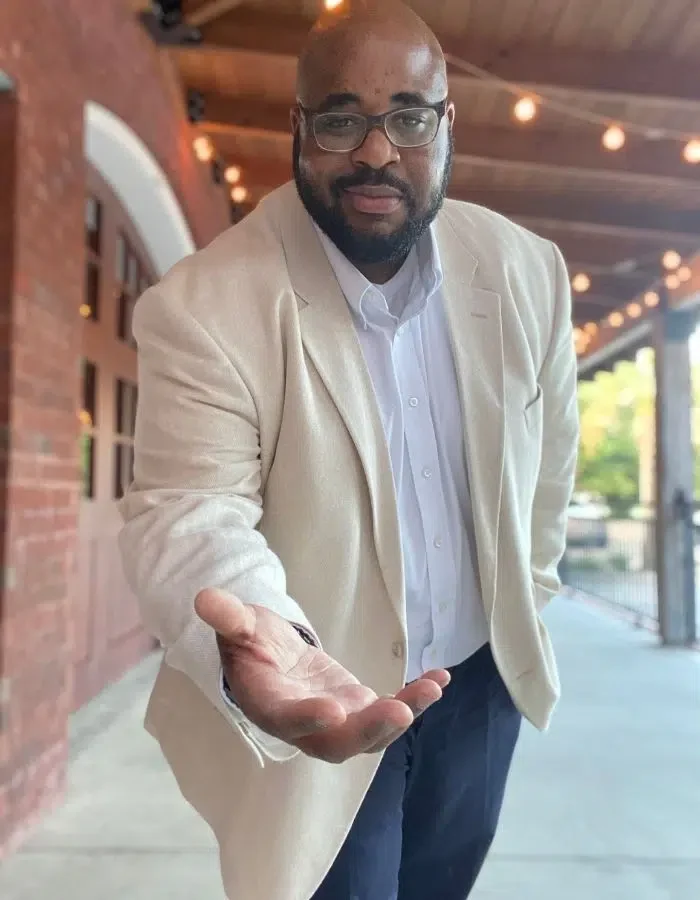
How I came to this work.
Most people find me when they're stuck. Not in the obvious ways — careers are working, families are intact, money is fine. Stuck in the harder way: in a life that looks right from the outside and feels wrong in the quiet hours. In a role that fit a previous version of you. In success that didn't deliver what it was supposed to.
I came to this work the same way most of my clients come to me — by working through it myself. My background sits in two worlds that don't usually talk to each other: leadership and operations inside high-pressure organizations, and clinical counseling. For years I treated them as separate. My own therapy and the coaching I received made it clear they weren't. People doing high-stakes work need the depth of clinical training. People in clinical work need someone who's actually navigated the weight of leading and building things. I sit in the middle on purpose.
The work itself is built around a framework I developed called TLC — Truth, Love, Community. It's the structure I walk people through. What it does, in practice: it forces you to face yourself honestly. It awakens you to what you actually want — not what you've been told you should want, not what got you here, but what's actually true. And once you see it, you can't unsee it. From there, the work becomes figuring out how to live aligned with it.
This is work for people who are ready. Not unstuck yet, not clear yet — but motivated, open, and willing to do what real change requires. I walk with clients through the peaks and the valleys both. I'll be honest with you when something needs to be heard. And I'll trust you to find your own answer, because in my experience, you already have it. My job is to ask the question that gets you there.
Clients describe working with me a few different ways. The first is that I see patterns they've been too close to see for themselves — connections between what's happening at work and what's happening at home, between their early life and the way they lead now. The second is that I refuse to hand them someone else's playbook; what worked for the last client isn't going to be what works for them. The third is that I'm comfortable with the hard conversation — the one they've been avoiding for years — and willing to stay in it until something shifts. Those instincts map to my Gallup CliftonStrengths top five: Strategic, Individualization, Restorative, Achiever, Analytical. The labels matter less than how the work feels in the room.
Outside the practice, I founded a nonprofit called Ausome Fathers. It supports fathers and male caregivers of autistic children — a population almost no one serves directly. It came out of my own life, and the recognition that the men I knew in that situation had no real language and no real community for what they were carrying. The same impulse drives both: when people don't have a place to think honestly with someone who'll meet them where they are, something has to be built.